Reynolds-Finley Section
 uamloc
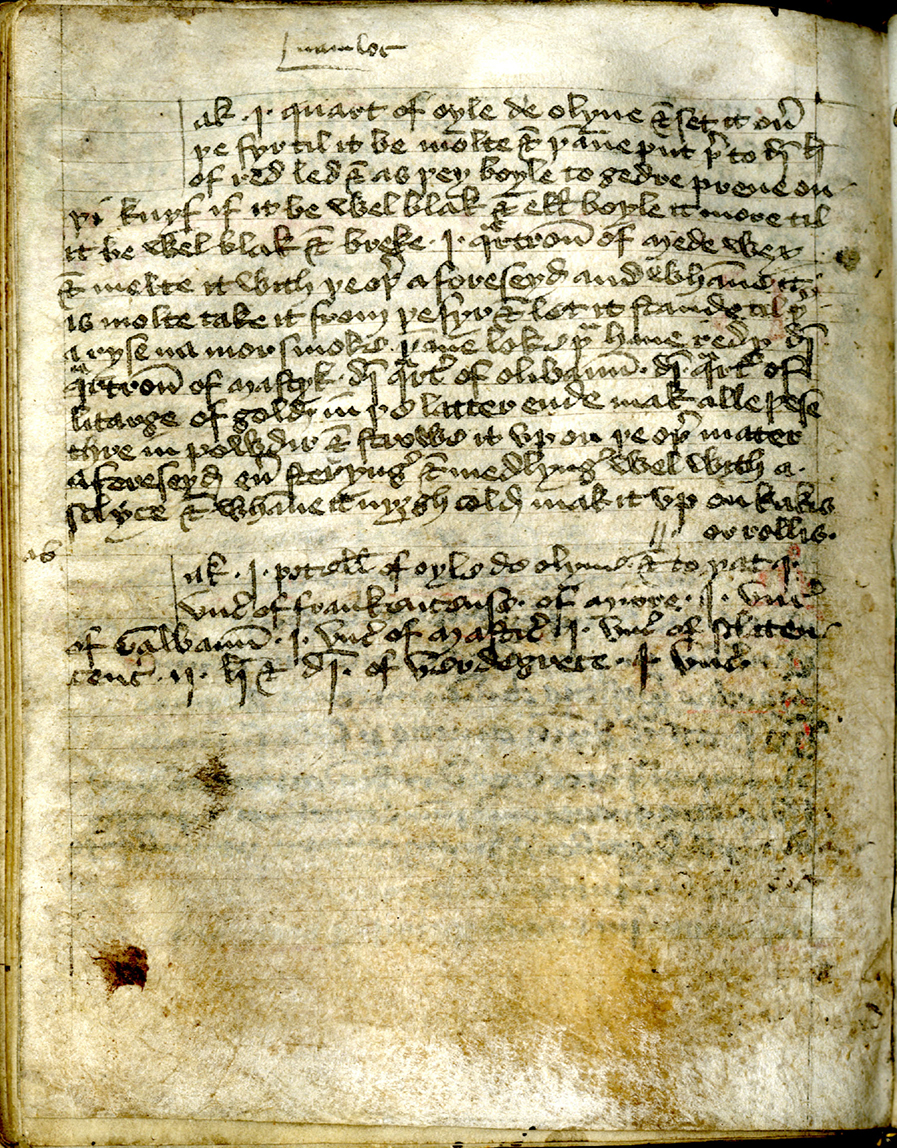
T]ak .i. quart of oyle de olyve & set it ovir
þe fyr til it be molte & þanne put þerto dimidium libram
of red led & as þey boyle to gedre preue on
þi knyf if it be wel blak & elles boyle it more til
it be wel blak & breke .i. quartroun of mede wex
& melte it with þe oþir aforeseyd and whanne it
is molte take it from þe fyr & let it stande til þer
aryse na mor smoke. þanne loke þu have redy dimidium
quartroun of mastyk. dimidium quartroun of olibanum dimidium quartroun of
litarge of gold in þe latter ende mak alle þese
thre in powdir & strowe it upon þe oþir mater
aforeseyd evir steryinge & medlynge wel wyth a
sclyce & whanne it nyggh cold mak it vp on kakis
// or rollis.
as.
T]ak .i. potell of oyle de olyvis & to þat .i.
vnce of frankencense. of mirre .i. vnce
of Galbanum .i. vnce of mastice .i. vnce of sclaten-
cence .ii. libras& dimidium of verdegrece .i. vnce.
 With other tracts
England, 14th century.
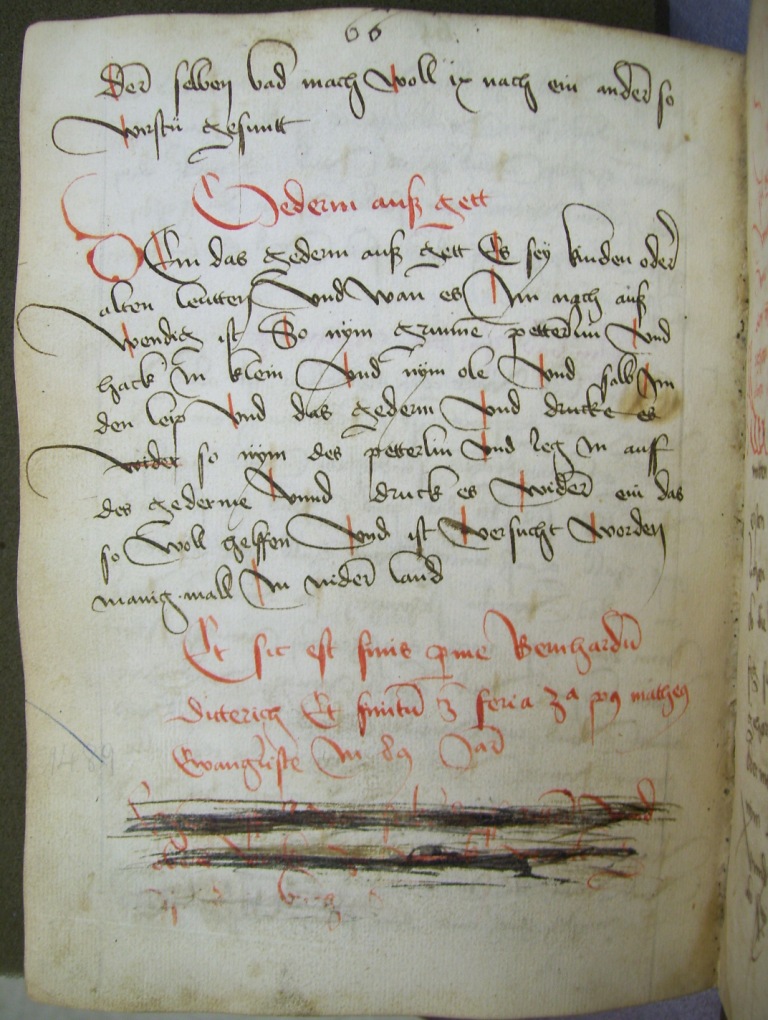
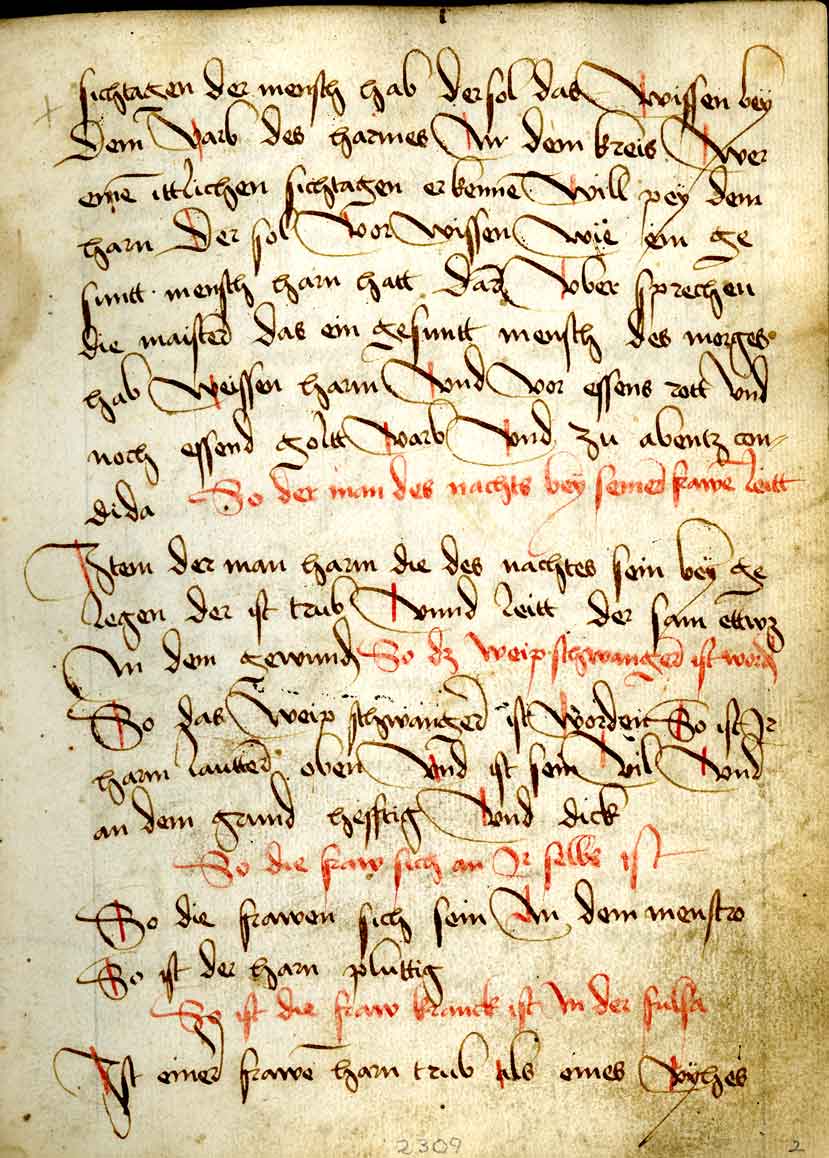
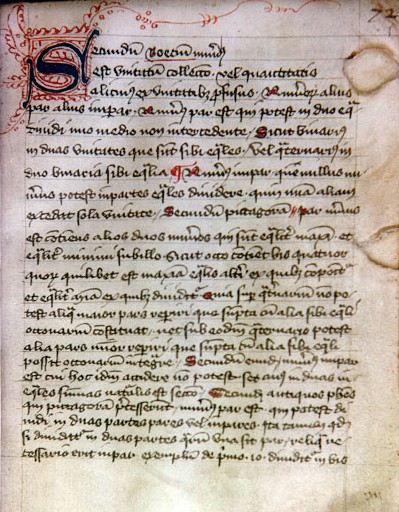
View the full text of this manuscript online. Bound together in this volume are the Tractatus de Magnetate et Operationibus eius (the thirteenth-century letter on the magnet by Petrus Peregrinus); a university handbook on the theory of numbers, proportions, and harmony; the seven signs of bad breeding; the seven signs of elegance; and household and medical recipes. Included is one of the oldest known surviving English mead recipes (folio 20r). The manuscript, written on vellum in brown ink with red chapter headings and red and blue initials, has 35 leaves and measures approximately 14.5 cm by 11 cm. Much of the text is in Latin, however, the recipes are mostly in English. The recipes have been transcribed and can be viewed through the various "Folio" pages found here. C. Tidmarsh Major performed the original transcription, which was later revised by Peter Murray Jones (see following note). Original spellings have been maintained; no corrections or improvements have been made. Transcriber’s note: "Thorn has been rendered þ, yogh has been rendered as a g. Words within curly brackets represent the symbols for drachma and ounce. Capitalisation and punctuation follow the manuscript, with a period representing punctus elevatus, a double slash representing a paraph mark, a single slash as found in the manuscript. Bold lettering represents rubricated words. Line divisions follow the manuscript."Peter Murray Jones, King's College, Cambridge University, October 2001.
View sections from this manuscript: