
Reynolds-Finley Section
Experiments and observations on the gastric juice, and the physiology of digestion. Plattsburgh: F.P. Allen, 1833.
“Experiments on the process of digestion, in a boy with a fistulous opening into his stomach.” [In] Philadelphia journal of the medical and physical sciences, v. 13. Philadelphia: H. C. Carey & Lea, 1826. pp. 382-384.
“Further experiments on the case of Alexis San Martin.” [In] Medical recorder, v. 9. Philadelphia: James Webster, 1826. pp. 94-97.
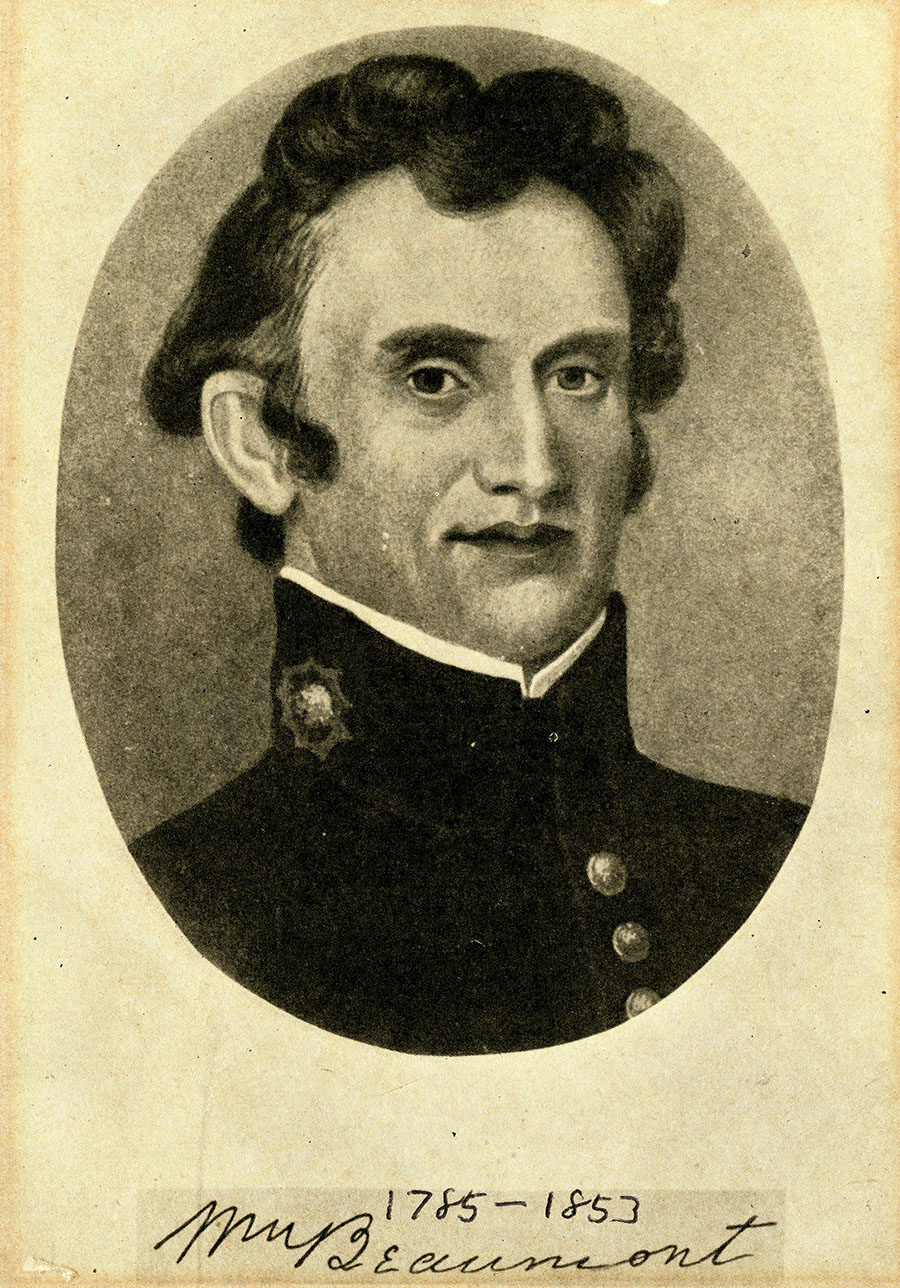 William Beaumont of Connecticut received his medical license from the Third Medical Society of Vermont in 1812. He became a United States army surgeon during the War of 1812. Later, while stationed in Michigan in 1822, he began treating Alexis St. Martin, whose gunshot wound in the abdomen left an opening in the stomach, or a gastric fistula. Beaumont took the helpless patient into his home, feeding and doctoring him for two years. Despite efforts to close the fistula, it remained opened (Kelly & Burrage 83). In 1825, after the patient had recovered somewhat, Beaumont began performing experiments on him, making valuable observations about the workings of the digestive system, a physiological subject that scientists previously understood very little.
Beaumont was well versed in existing literature on digestive physiology, and he used this knowledge in designing his experiments. One of his methods was to tie a string around a piece of food, insert it into the stomach through the fistula, and then remove it after varying periods of time to see the progress of digestion (Duffin 56). Through experimentation, he determined the speed and ease of digestion for different types of food, as well as stomach temperature and movements during digestion (One Hund. Books 61). Beaumont conducted his experiments in a professional and careful manner, and when presented with questions out of his realm of specialty, he consulted authorities in other scientific fields. He sent samples of gastric juice to well-known chemists for testing, and they discovered its composition (Dict. Sci. Bio., Vol. 1&2, p. 542). His preliminary papers appeared in the Philadelphia journal of the medical and physical sciences and the Medical recorder, and their importance was recognized in both America and Europe. The Reynolds-Finley Library has some of these journal entries as well as a first edition of Experiments and observations on the gastric juice, and the physiology of digestion, in which Beaumont reveals results from about 240 experiments on St. Martin. Dedicated to his research, Beaumont struggled for years to keep St. Martin willing and in close enough proximity to continue his studies. After the book’s publication in 1833, St. Martin no longer allowed the experiments, and so Beaumont discontinued his study of gastric processes. However, he holds an important place in the history of medicine as the first to accurately describe the digestive system, and the first American to make a significant contribution to the field of physiology (One Hund. Books 61).
Dict. Sci. Bio., Vol. 1&2, pp. 542-544; Duffin, Hist. of Med., p. 56; Kelly & Burrage, Dict. Amer. Med. Bio., pp. 82-84; One Hund. Books, 61; Reynolds Historical Library, Rare books and coll…, 351, 354, 355.
Image: William Beaumont, Print Collection, Reynolds-Finley Historical Library.
[Canon. The 5 books. Arabic text]. Rome: Stamperia Medicea, 1593.
Liber canonis, de medicines cordialibus, et cantica… Basle: J. Hervagius, 1556.
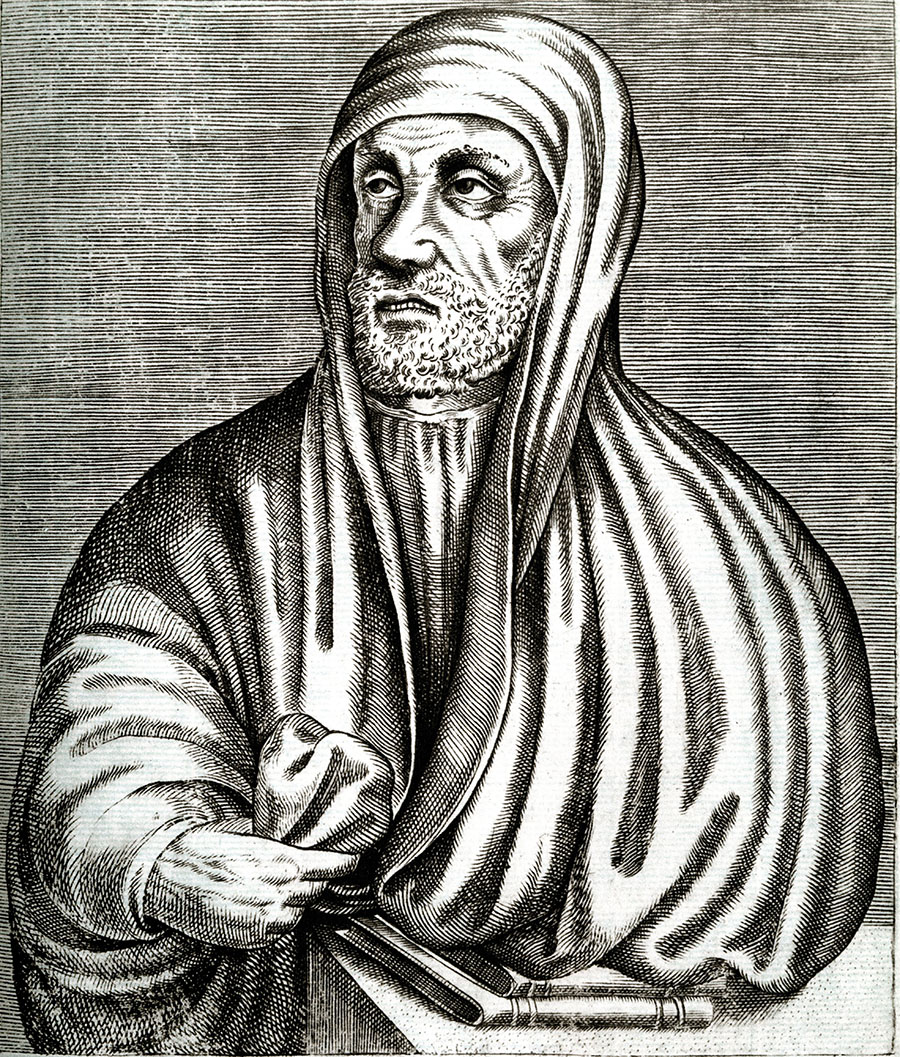 Ibn Sina, known as Avicenna in the West, was a contributor to many fields, including geology, philosophy, law, theology and astronomy, but his greatest legacy lies in the field of medicine. He began studying medicine at sixteen and was already celebrated in the field by age eighteen (Not. Med. Books 53). His posts included court physician, vizier to several caliphs, and chief physician to the Baghdad hospital. It is estimated that Avicenna wrote over one hundred books, even though only a small portion of them have survived to the present day. His work, Al-Qanun, or Canon in English, is one of the most famous medical texts in the world. Dominating medical education and practice in Europe and Asia for centuries, the Canon is a comprehensive codification of all Graeco-Arabic medicine. This book also includes many important original observations which are sometimes overshadowed by the encyclopedic nature of the work (Sarton 710). For example, Avicenna was the first physician to observe the communicability of diseases such as tuberculosis and dysentery, the spread of diseases through water, the properties and preparation of alcohol and sulfuric acid, the genetic nature of certain conditions, and the sweet taste of urine in those with diabetes.
Despite all the positive results of his work, the Canon did have some negative impact on the advancement of medicine in the Middle Ages by promoting reasoning over first-hand observation and initiating the idea that surgery is an inferior branch of medicine (Garrison 131). Avicenna’s Canon only declined in influence during the Renaissance when the actual medical writings of the ancient Greeks became available in Europe (Not. Med. Books 53).
The Reynolds-Finley collection has a copy of the first Arabic edition of Al-Qanun to appear in the West, published in Rome in 1593 (Sarton 711). Only this book and one other Arabic version include the important clinical records that Avicenna originally intended to append to his work (Garrison 130). It includes some of Avicenna’s works on logic, physics and metaphysics in the appendix. Also, the Reynolds-Finley Library holds a Latin translation from 1556, Liber canonis, de medicines cordialibus, et cantica. This is an edition of the original Latin translation of the Canon by Gerard of Cremona (1147-1187). Illustrations within show procedures for treating disorders of the spine.
Garrison, Hist. Med.,4th Edition, pp. 130-131; Garrison & Morton, Med. Bib., 5th Edition, 43-45 Heirs of Hippocrates, 39 & 40; Not. Med. Books, p. 53; One Hund. Books, 7; Reynolds Historical Library, Rare books and coll…, 230 & 231; Sarton, Intro. to the Hist. of Sci., Vol. I, pp. 709-711.
Image: Avicenna, [From] Avicennae Medicorum Arabum principis, Liber Canonis…(1556), Reynolds-Finley Historical Library.
This exhibit includes some of the most important figures in the history of medicine. Through the discoveries and innovations of these people, one can trace the advancements in medicine throughout the ages. Click on a name to read a short biographical sketch of that individual. Highlighted within the sketches are one or two of the figure's major works held by the Reynolds-Finley Historical Library.
Image: From Andreas Vesalius's De humani corporis fabrica libri septem (1543), Reynolds-Finley Historical Library.
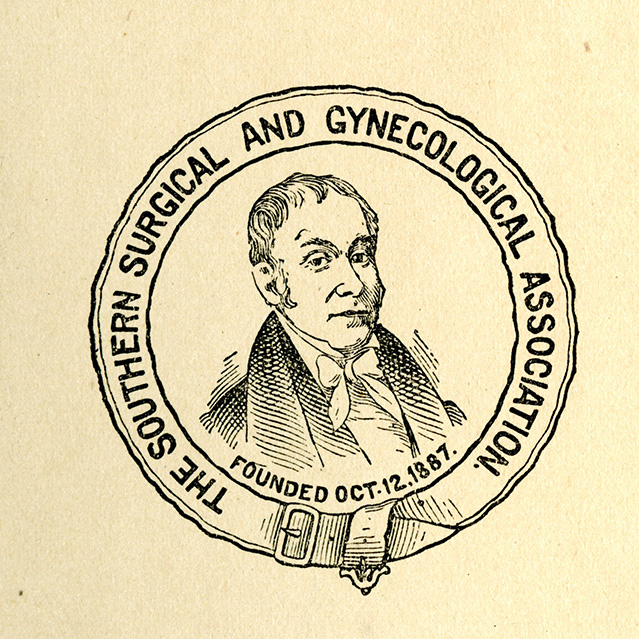
The Southern Surgical & Gynecological Association was founded in 1887 by Birmingham brothers and surgeons, Drs. W.E.B. and J.D.S. Davis. The organization was renamed the Southern Surgical Association (SSA) in 1916. Since the association’s first annual meeting on December 4-6, 1888, the publication of annual transactions has followed. These transactions include proceedings of the meetings as well as a publication of the scientific papers read therein, with transcriptions of subsequent paper discussions.
In 1987, Lister Hill Library (now part of UAB Libraries) at the University of Alabama at Birmingham became the official archival repository for the SSA. The Reynolds-Finley Historical Library holds all archival copies of the association’s transactions, and the UAB Archives holds the remainder of the association’s archives.
The archival volumes of the transactions are made available under the auspices of the Southern Surgical Association, and with funding from the Joseph M. Donald Memorial Endowment of the UAB Department of Surgery to support the SSA historical collection.
View the Transactions of the Southern Surgical Association Digital Collection.
Learn more about the history of the SSA, trace the development of surgical topics over more than 100 years within the transactions, and discover searching and browsing tips for the digital collection by exploring our Transactions of the Southern Surgical Association Research Guide.
Image: The insignia of the SSA, from the title page of the 1889 transactions.