
Reynolds-Finley Section
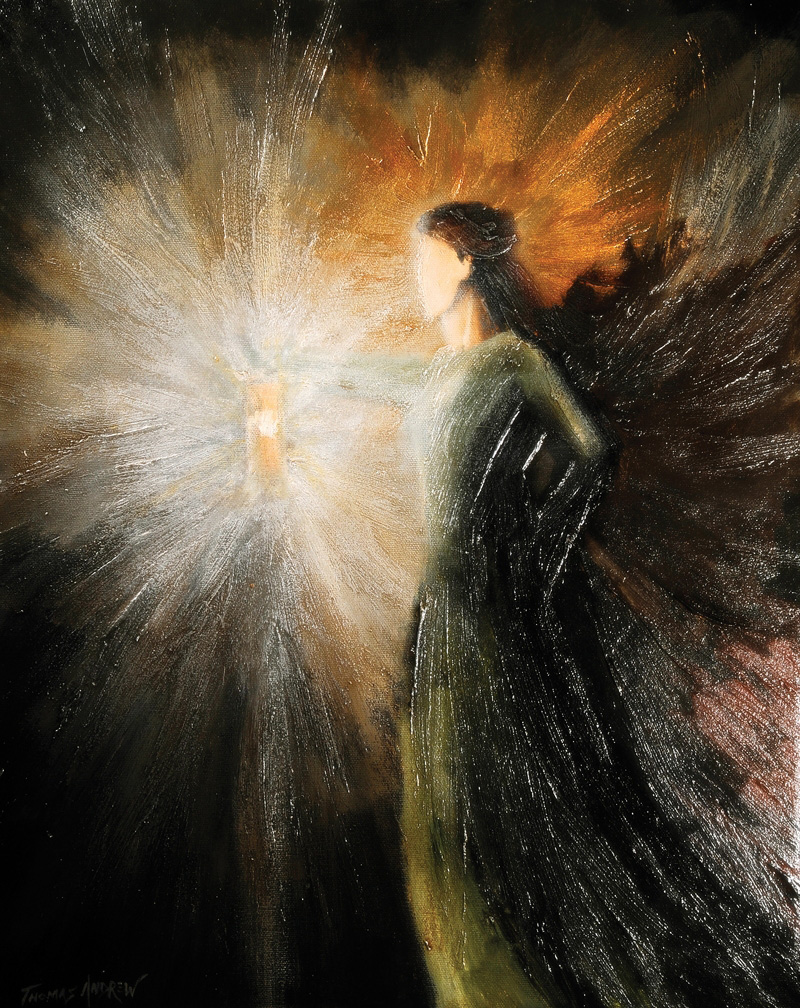 Painting by Birmingham artist Thomas Andrew, inspired by the photography of Florence NightingaleSince Dean Doreen Harper came to the University of Alabama at Birmingham School of Nursing in 2005, she has taken a special interest in the Florence Nightingale Letters, their preservation, and in sharing them with the community. To this end, the Reynolds Historical Library (now the Reynolds-Finley Historical Library) and School of Nursing, with the assistance of the UAB Mervyn Sterne Library, have digitized the Nightingale letters and made them freely available through the UAB Digital Collections.
Furthermore, as part of the School of Nursing’s 60th anniversary celebrations in 2010, a special exhibit on Florence Nightingale sponsored by the school and the Historical Collections of Lister Hill Library (of which the Reynolds-Finley Library is part), was displayed from November 30, 2010 through May 2011 in the Alabama Museum of the Health Sciences on the 3rd floor of Lister Hill Library. Also, a special “Night with Nightingale” event was held on November 30 to open the exhibit with a reception and lecture titled “Florence Nightingale: Learning From the Past & Looking Forward to the Future," by Barbara Dossey, PhD, RN, AHN-BC, FAAN, International Co-Director, Nightingale Initiative for Global Health. Click here to view the recording of this lecture.
A Message from the Former Dean of the UAB School of Nursing
UAB’s Nightingale Letter Collection is an amazing set of letters and documents that depict Nightingale’s vision and leadership in nursing and exemplify the core values that sustain nursing as a profession. The Nightingale Initiative has activated a partnership between UAB’s School of Nursing and the Reynolds [now Reynolds-Finley] Historical Collection at the Lister Hill Library of the Health Sciences. The Initiative includes the opening of this website, the digitized letters available on exhibit, scholarly activities, visiting lecturers and fellows, and fundraising for an interactive exhibit located in the School of Nursing to expose nurses, students, faculty and other health professionals about the linkage between health care quality and evidenced-based practice proposed by Nightingale more than 100 years ago.
These 50 handwritten letters span from 1853 to 1893 and the collection also includes documents and reports submitted to members of Parliament, the Royal Commission and policymakers, as well as a copy of the Mortality of the British Army with an inscription to Nightingale’s mother, dated 1867, and also contains two photographs of Nightingale. The Collection consists of letters sent by Nightingale to Madame Julie Salis-Schwabe, Thomas Gillham Hewlett, MD, Richard Whitfield, and testimony to Parliament. The letters, acquired in 1951 at a New York bookstore by Lawrence Reynolds, MD, were later donated to UAB in 1958.
The UAB School of Nursing has a substantial interest and investment in these letters as they relate to the profession’s core values, global health and nursing leadership and has worked closely with the Historical Collections staff to exhibit, digitize, and display this relatively unseen collection of Nightingale. Founded in 1950, UAB’s nursing school has a history of distinguished leadership among its peers and has produced countless nursing leaders worldwide. The School has been designated as a Pan American Health Organization (PAHO)/World Health Organization Collaborating Center (WHOCC) for International Nursing since 1993 with recognition of the School's sustained leadership in global nursing development. I invite you to examine this website and to spend some time reading Nightingale’s relatively unknown letters. I hope you are inspired as I am to learn about the Nightingale Letter Collection- her “living” legacy in nursing, public health and health care administration here at UAB.
Doreen C. Harper, PhD, RN, FAAN
Dean, Professor and Fay B. Ireland Endowed Chair in Nursing
 Florence NightingaleThis exhibit features the Reynolds-Finley Historical Library's collection of fifty handwritten letters by modern nursing pioneer, Florence Nightingale, spanning from 1853 to 1893. Purchased in 1951 from the Old Hickory bookstore in New York by Lawrence Reynolds M.D., these letters came to the university when Dr. Reynolds donated his collection of approximately 5,000 rare books and manuscripts related to the history of medicine and science to establish the Reynolds Historical Library in 1958. The letters offer a unique perspective into the life of Florence Nightingale, particularly during a period for which little information is currently known. About half of the letters concern sanitation in India, and were primarily written to T. Gillham Hewlett, Health Officer of Bombay. In the remainder, largely addressed to Mme. Julie Salis Schwabe, Nightingale discusses war relief efforts and charitable contributions for the Franco-Prussian and Austro-Hungarian wars. To facilitate research UAB Libraries, in conjunction with the UAB School of Nursing, has digitized the letters and they are now freely available through the UAB Digital Collections. The objective of this website is to highlight and provide context to the digitized letters.
Included in this collection:
- Birmingham Cholera Epidemic of 1873
- Pellagra in Alabama
Notice: Warning Concerning Copyright Restrictions
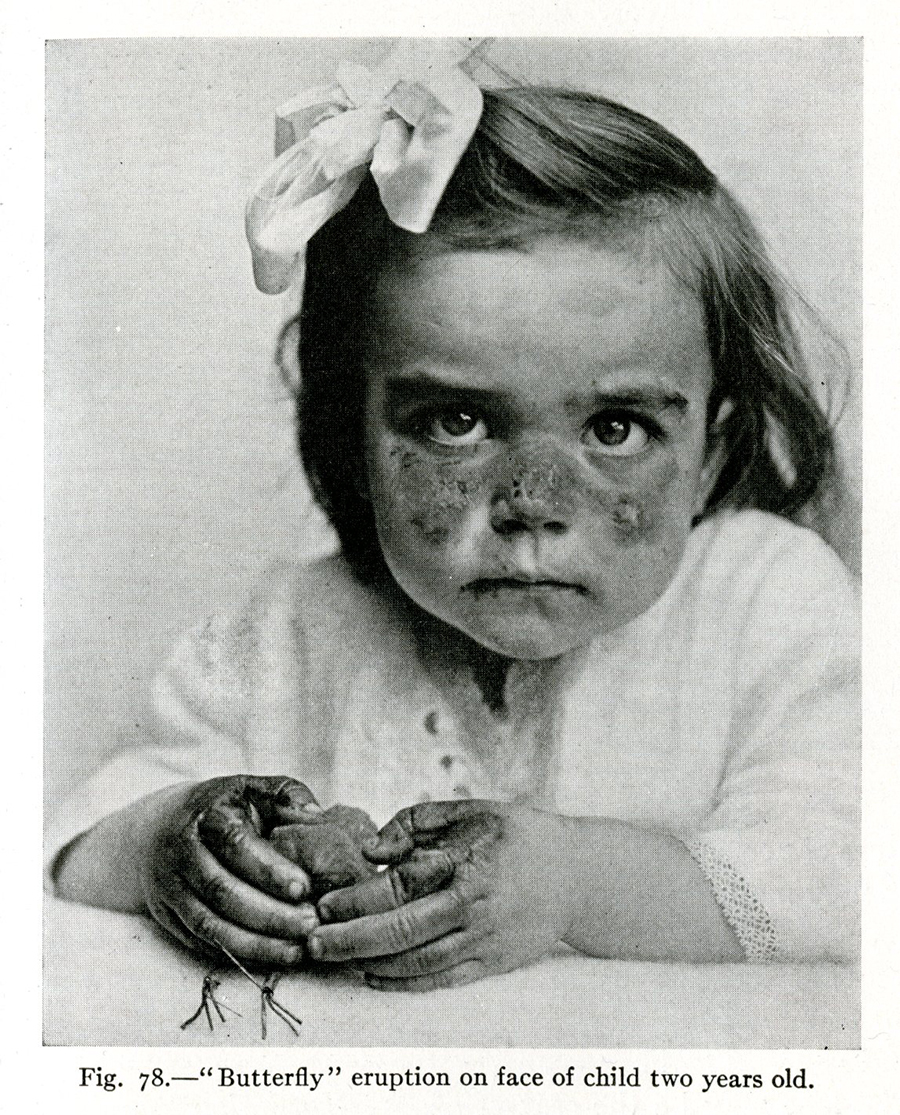 Butterfly' eruption on face of child two years old.These images may be protected under The Copyright Law of the United States (Title 17, United States Code), which governs the making of photocopies or other reproductions of copyrighted material. The images below may not be copied and may not be used without completion of a permission agreement processed through the University’s legal office. All rights reserved. For more information, contact us.
Pellagra in Alabama
Pellagrin with characteristic lesions on the hands and arms, [Reproduced in] French, Herbert (ed.). An Index of Differential Diagnosis of Main Symptoms (New York: William Wood & Co., 1917), Lister Hill Library of the Health Sciences. View image.
History of Pellagra
Title page from the second volume of Gaetano Strambio’s De Pellagra, Reynolds-Finley Historical Library. View image.
Gaspar Casal’s illustration of pellagra’s cutaneous lesions around the collar, [From] Deaderick, William H. and Loyd O. Thompson. The Endemic Diseases of the Southern States (Philadelphia: Saunders, 1916), Reynolds-Finley Historical Library. View image.
Robert Thom illustration of Goldberger with his assistant C. H. Waring in one of their 1914 orphanage studies near Jackson, Mississippi (Collection of the University of Michigan Health System, Gift of Pfizer Inc., UMHS. 42.). View image.
Alabama Physicians Debate the "Scourge of the South"
Shown here are the dermatologic symptoms characteristic of the disease exhibited in a child. Photo taken by Dr. H. P. Cole of Mobile, Alabama, published in George N. Niles, 2nd ed., Pellagra: An American Problem (Philadelphia: Saunders, 1916), Reynolds-Finley Historical Library. View image.
Mount Vernon Hospital for the Colored Insane, near Mobile, Alabama, where Dr. George H. Searcy first recognized epidemic pellagra in the U.S., courtesy of UAB Archives. View image.
Dr. Carl A. Grote's Forgotten Contribution
Dr. Carl A. Grote, courtesy of Dr. Carl Grote, Jr., Huntsville, AL. View image.
Grote examines a young patient in Walker County, 1914-1918, courtesy of Dr. Carl Grote, Jr., Huntsville, AL. View image.
Walker County public health work in a local school, 1914-1918, courtesy of Dr. Carl Grote, Jr., Huntsville, AL. View image.
Grote (seated at the desk) and his staff in his office as Walker County Public Health Officer, ca. 1914-1918, courtesy of Dr. Carl Grote, Jr., Huntsville, AL. View image.
Image Credits
Child with pellagra skin eruption on her face, [From] Deaderick, William H. and Loyd O. Thompson. The Endemic Diseases of the Southern States (Philadelphia: Saunders, 1916), Reynolds-Finley Historical Library. View image.