
Reynolds-Finley Section
Précis élémentaire de physiologie. 2 vols. Paris: Méquignon-Marvis, 1816-1817.
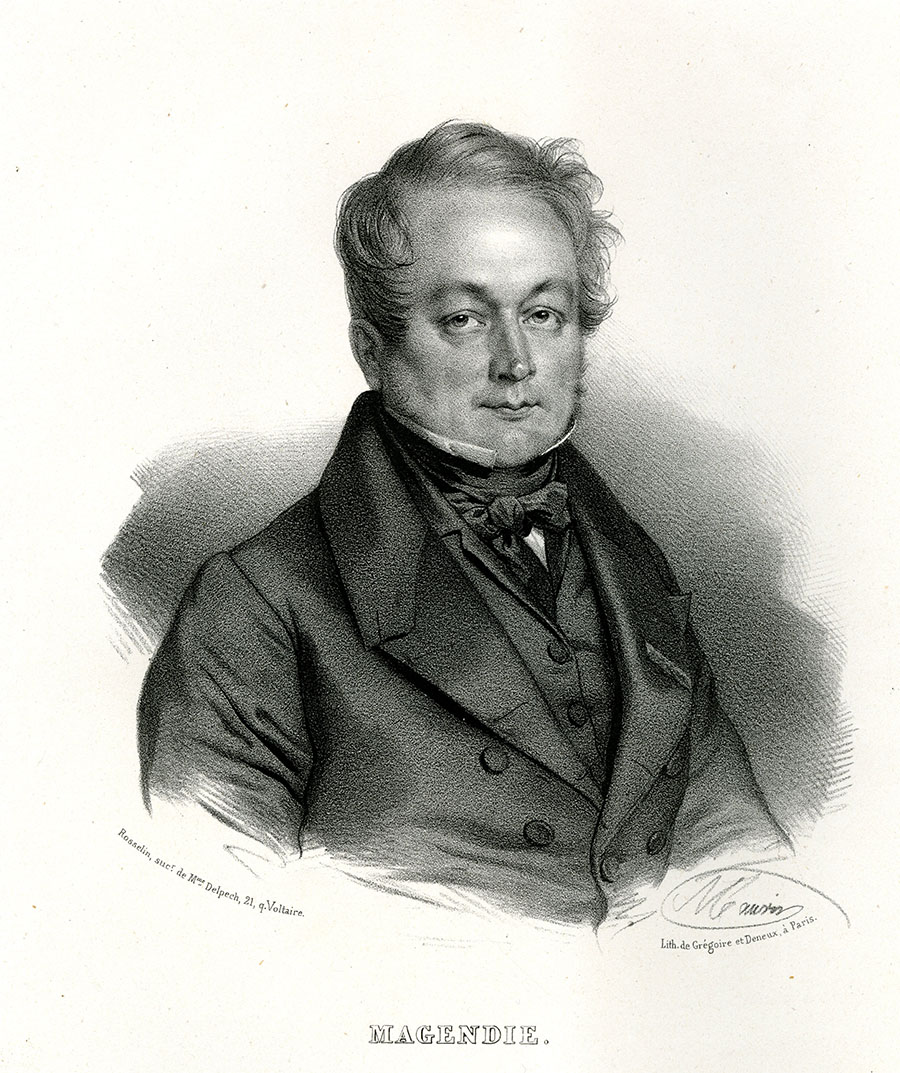 This Frenchman from Bordeaux was a pioneer in the fields of experimental physiology and experimental pharmacology. A child during the French Revolution, Magendie’s republican father was more concerned with politics than with his surgery practice. Magendie’s mother died while he was still young, and because his father was obsessed with the Rousseauistic ideas of independence over organized education, Magendie did not attend school until the age of ten, and then only upon his own request. He excelled quickly through school, but during these years, the education system in France was unstable and regularly changing its doctrine. This had a lasting effect on Magendie. He became devoted to facts and opposed to theories and conventional dogmas (Dict. Sci. Bio, Vol. 9-10, p. 9). Though he was educated to practice medicine, Magendie chose experimental science as his career. With this, he focused on the verification of isolated facts and rejected attempts at hypotheses and generalizations (Garrison 465).
Francois Magendie’s experimental method was vivisection of unanesthetized animals. Performing this procedure on puppies, he was able to prove that the anterior roots of the spinal nerves function as a motor and the posterior as a sensor. But Magendie was not the only scientist claiming this discovery, which has been identified as the most important in the field of physiology since Harvey (Garrison & Morton 1256). Charles Bell cut the spinal roots and observed that the anterior has more influence over motion, but Magendie determined that these roots have entirely different functions. These two scientists disputed over attribution, and it was eventually named the Bell-Magendie law in recognition of both. Despite the debate, Magendie is certainly responsible for the discovery’s experimental verification (Dict. Sci. Bio., Vol. 9-10, p. 9).
Magendie’s Précis élémentaire de physiologie, an influential textbook on physiology, was published in two volumes, the first in 1816 and the later in 1817. Described by Garrison & Morton as the first modern physiology textbook, it includes descriptions of facts proven by experimentation (597.1). Little attention is given to deductions and conclusions based on doctrines and traditions. The second volume contains experimental proof of the significance of protein in animal diets. This textbook was very influential in medicine and biology throughout the first half of the nineteenth century, and was translated into both English and German (Dict. Sci. Bio., Vol. 9-10, pp. 8-9). The Reynolds-Finley Library has a copy of this textbook from its original publication.
Dict. Sci. Bio, Vol. 9-10, p. 8-10; Garrison, Hist. of Med. 4th Edition, pp. 465-466; Garrison & Morton, Med. Bib., 5thEdition 597.1 & 1256; Heirs of Hippocrates, 818; One Hund. Books, 58; Reynolds Historical Library, Rare books and coll…, 2599.
Image: François Magendie, Print Collection, Reynolds-Finley Historical Library.
Aphorismi secundum doctrnam Galeni. [With other tracts]. Bologna: Franciscus (Plato) de Benedictus, for Benedictus Hectoris, 1489.
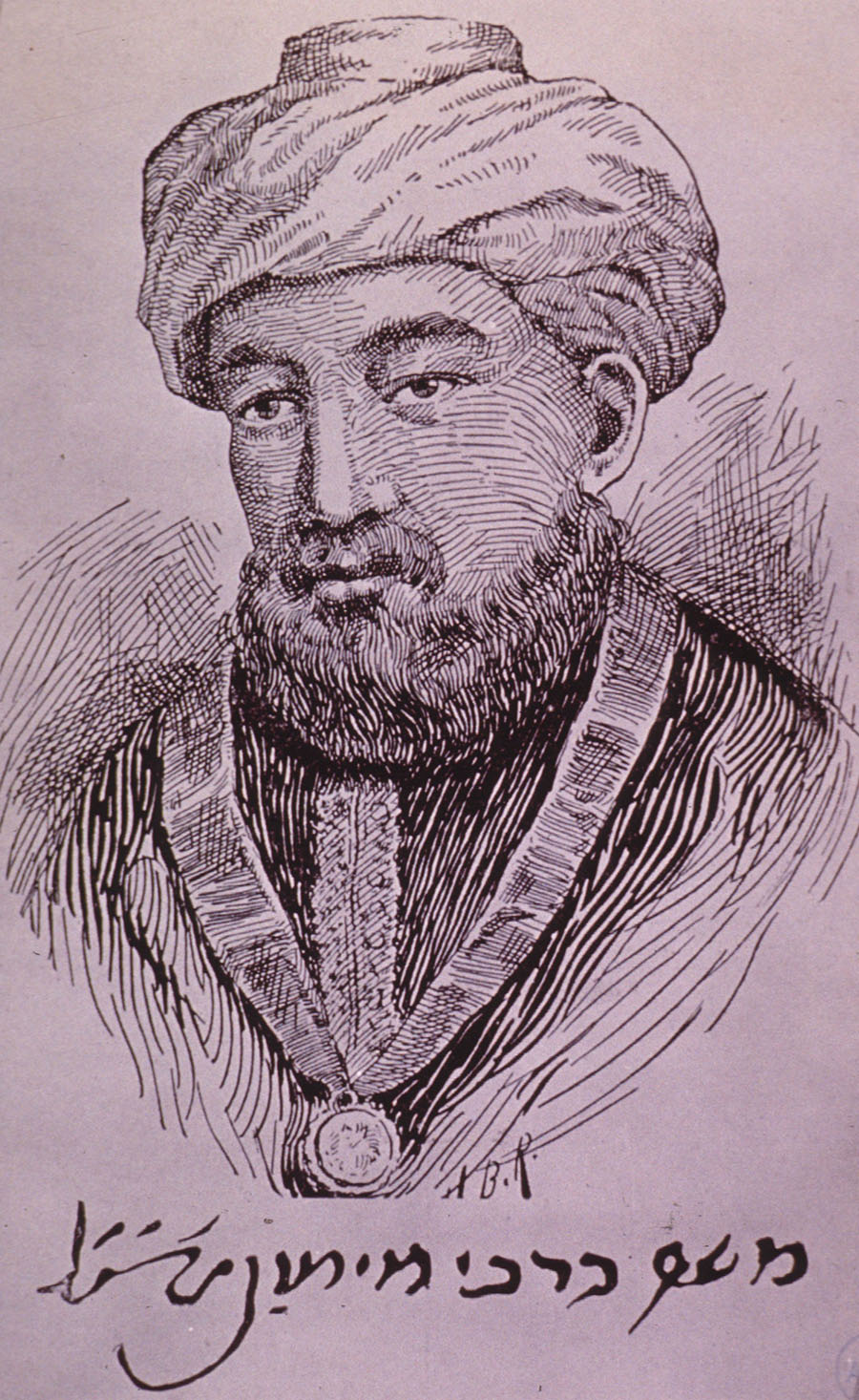 Like many medieval physicians in the Arab world, Maimonides was a philosopher as well. This trend was encouraged by Galen’s study of philosophy and its permutations into his medical writings. As a result, translations of the classical texts preserved by the Arabs were full of Aristotelian and natural philosophy, a characteristic that dominated medicine of the Middle Ages (Cambridge 73). Maimonides is a typical representative of this trend. Originally from Spain, he was a student of another famous Spanish physician-philosopher, Averroes. However, Maimonides left Spain in response to an edict forcing out all citizens who would not convert to Muslim. Being Jewish, he emigrated with his family and eventually settled in Egypt (ca. 1166) where he became court physician to Sultan Saladin. He spent the rest of his life in Egypt and produced most of his work there. Maimonides is famous for his codification of the Talmudic law and for his Judeo-Aristotelian philosophy.
Just as he codified law, Maimonides did the same for the works of Galen. Though clearly unafraid of criticizing Galen, pointing out his contradictions and the flaws in his philosophy, Maimonides still recognized the authority of Galen’s work (Dict. Sci. Bio., Vol. 9, 31). In fact, the most important and most popular of his medical writings, Aphorismi secundum doctrnam Galeni, is devoted to the ideas of Galen. The Aphorismi classifies Galen’s words by medical headings, such as surgery, pharmacy, gynecology, and so on, presenting the vast writings of Galen in a systematic way for practical usage. The Reynolds-Finley Library holds a copy of the first edition Latin text, published in 1489.
Cambridge. Illus. Hist. Med., pp. 68-69, 73; Dict. Sci. Bio. Vol. 9, pp. 27-31; Garrison, Hist. Med.,4th Edition, pp. 132-133; Garrison & Morton, Med. Bib., 5th Edition, 53, 6495.7; McGuinn, Pen, Press, and Physick, p.12; Reynolds Historical Library, Rare books and coll…, 18; Oxford Comp. to Med., Vol. I, pp. 686-687; A catal. of printed books in the Wellcome Hist. Med. Libr., Vol. I, 3989.
Image: Moses Maimonides, Courtesy of the National Library of Medicine.
Die aetiologie der tuberculose. Berlin: August Hirschwald, 1882.
Untersuchungen über die aetiologie der wunderinfectionskrankheiten. Leipzig: F. C. W. Vogel, 1878.
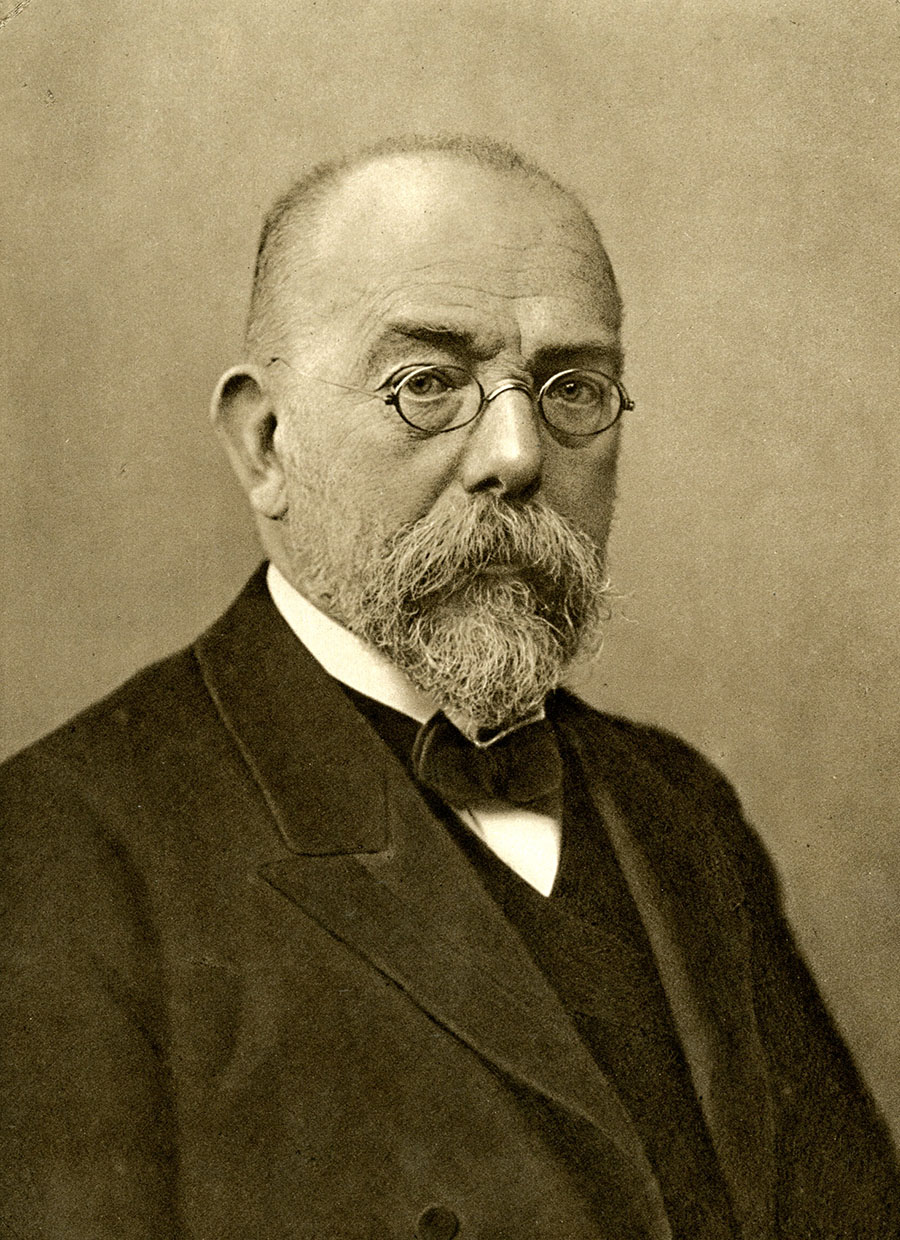 Robert Koch, another pioneer in the fields of bacteriology and microbiology, was as instrumental as Pasteur in confirming the germ theory of disease. A native of Klausthal, Germany, Koch received his degree in medicine from the University of Gottingen in 1866. After serving as an army surgeon in the Franco-Prussian War, he became district physician in Wollstein. This was an active lifestyle, but Koch still found time for his great interest in microscopy. While in Wollstein, he concentrated his extracurricular studies on anthrax, and in 1876, gained recognition in the medical community for tracing the life history of the anthrax bacillus and discovering this bacterium as the cause of the disease (Garrison 578). In the following years, he focused much of his attention on wound and surgical infections, and the resulting publication was Untersuchungen über die aetiologie der wunderinfectionskrankheiten (Investigations into the etiology of traumatic infective diseases). Here, Koch differentiates between six types of bacterial infections, identifies their specific characteristics, maintains the distinct infections through several generations, and displays the role of bacteria in causing wound infections. He established the fact that four criteria must be met before designating a bacterium the cause of infection. These postulates, which later came to be known as “Koch’s postulates”, are first stated in this work (Garrison & Morton 2536). Still applicable to the study of disease etiology today, the requirements are that “the organism must (1) be found in every case; (2) be isolated and grown in pure culture; (3) produce the same disease when injected into animals; (4) be recovered in all experimental cases” (Duffin 81). The postulates, along with Koch’s demonstration of bacteria capable of passing this test, were finally able to convince the medical community of Pasteur’s germ theory.
Koch eventually held posts at such institutions as the Imperial Health Department, the University of Berlin, and the Institute for Infectious Diseases. During his lifetime, he continued to advance the study of bacteriology by developing new microscopy techniques for photographing, culturing, dying and staining bacteria. In 1882, he used these perfected techniques to help identify the bacteria causing pulmonary tuberculosis. This revelation helped control the spread of tuberculosis by turning attention to the true cause instead of the formerly dominant theory of inadequate nutrition (Heirs of Hippocrates 1075). In 1905, Koch received the Nobel Prize for this beneficial discovery. His paper on the subject, Die aetiologie der tuberculose, is also held in the Reynolds-Finley Historical Library. Though it is a short ten-page article from the journal Berliner klinische Wochenschrift, it is one of Koch’s most appreciated works.
Cambridge Illus. Hist. Med.,184; Duffin, Hist. of Med., pp. 81, 157; Garrison, Hist. of Med. 4th Edition, p. 578-580; Garrison & Morton, Med. Bib., 5th Edition, 2536; Heirs of Hippocrates, 1075; One Hund. Books, p. 80; Oxford Comp. to Med., Vol. I, p. 636; Reynolds Historical Library, Rare books and coll., 2333 & 2336.
Image: Robert Koch, Print Collection, Reynolds-Finley Historical Library.
The natural history of the human teeth: explaining their structure, use, formation, growth, and diseases. 2nd edition. London: printed for J. Johnson, 1778.
A treatise on the blood, inflammation, and gun-shot wounds. London: John Richardson for George Nicol, 1794.
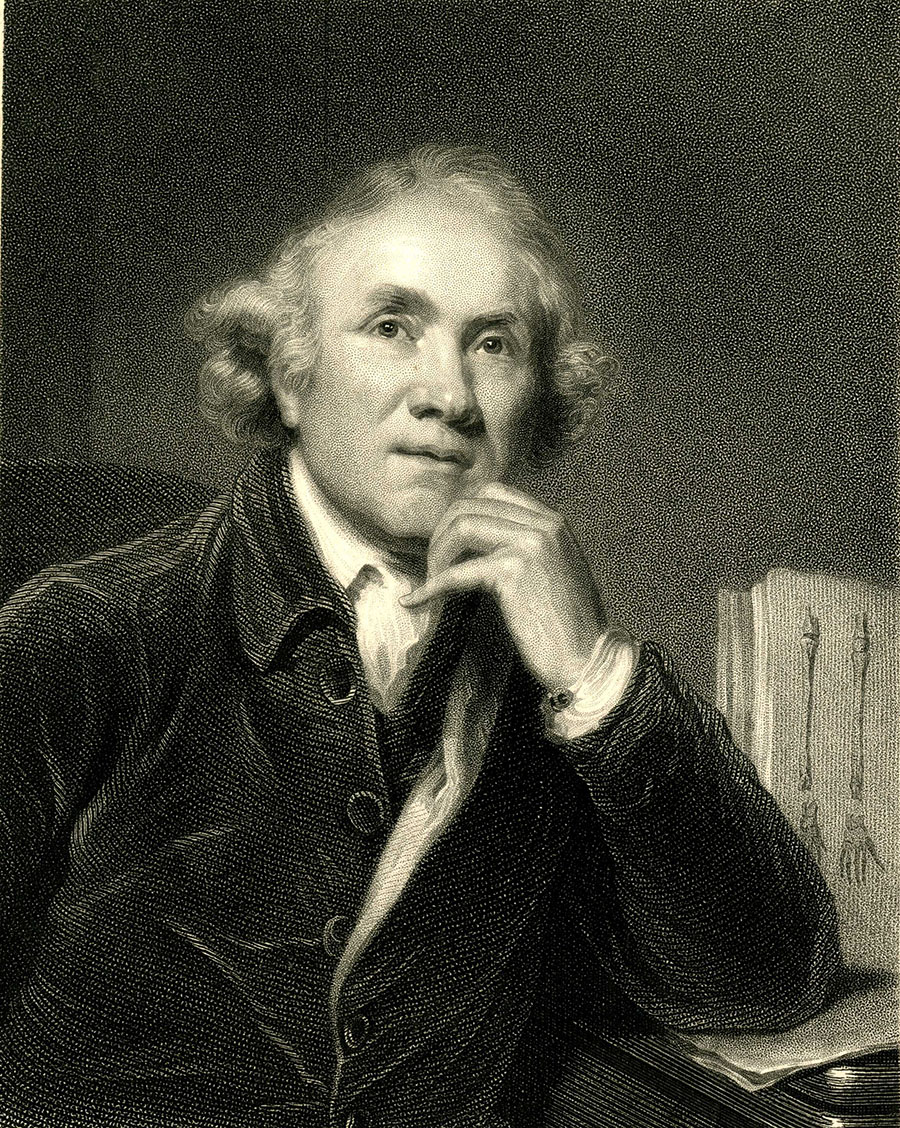 In 1748, the fairly uneducated and uncultured twenty year old John Hunter came to London from Scotland to study dissection at the school of anatomy ran by his brother, William Hunter. After only a year, he was already teaching anatomy and learning surgery from the experts of the day. Later he was an army surgeon in the British expedition to Belle Ile during the Seven Year’s War. Knowledge acquired from this first-hand experience with gunshot wounds eventually showed up in his famous A treatise on the blood, inflammation, and gun-shot wounds (1794), an original edition of which is owned by the Reynolds-Finley Library. This work includes one of the initial studies on the pathology of inflammation. Also, he proposes the removal of mortified tissue from wounds and reductions in blood loss to enable faster healing (One Hund. Books 52).
Upon his return from service, Hunter settled in London and became a hard-working surgeon, teacher, collector of specimens and researcher of anatomy and pathology. He was dedicated to science, even sacrificing his own health by inflicting himself with venereal disease so that he could observe its character. He was an interested and involved instructor, being available for discussion long after class, giving lectures and hosting student society meetings at his house, and supporting a list of well-known pupils (Dict. Sci. Bio, Vol. 5-6, 567). His vast collection of anatomical and biological specimens was put on display in an educational museum. After his death, the collection became the famous Hunterian Museum of the Royal College of Surgeons, a portion of which still remains despite damage from a 1941 bombing. His classifications of teeth are still used in dentistry today and his studies remain fundamental to dentistry. By combining surgery with experimental research in physiology and pathology, he was responsible for raising it from the status of an art to that of a science (Garrison 344-345). Indeed, through Hunter’s influence the barber surgeon’s trade was transformed into a profession.
Hunter is the first to study teeth scientifically, introducing classifications, such as the cuspids, bicuspids, molars and incisors. The work that presents these classes is The natural history of the human teeth, originally published in 1771. Here, he also tracks tooth development from birth and addresses tooth structure and composition. He proposes a form of transplantation and a device for treating malocclusion. The Reynolds-Finley Library holds the second edition of this work from 1778, which includes a supplement, entitled A practical treatise on the diseases of the teeth. Here, Hunter develops observations about diseases of the mouth, abscesses, nerve pains in the jaw and tooth decay (Not. Med. Books 131).
Dict. Sci. Bio, Vol. 5-6, p. 567; Garrison, Hist. of Med., 4th Edition, pp. 344-348; Garrison & Morton, Med. Bib., 5thEdition, 78, 2283, 3675, 3676; Heirs of Hippocrates, 609, 612, & 613; Not. Med. Books, p. 131; One Hund. Books,52; Reynolds Historical Library, Rare books and coll…, 4824 & 2120.
Image: John Hunter, Print Collection, Reynolds-Finley Historical Library.